
Automotive
 Now I can’t start talking about cars without going into incredible detail about the type of cars I drive. In general, I enjoy driving and tinkering with those wonderful 2.2L/2.5L turbocharged front wheel drive Chryslers, which I lovingly call “Mini-Mopars” for short. I managed to diverge from the P-body a bit, as my current daily driver is a 1986 Dodge Daytona Turbo Z C/S. The “C/S” stands for Carrol Shelby which, for the 1986 Daytonas, meant an additional handling package in addition to the fully-loaded “Turbo Z” package.
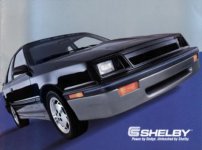 I found that I could not get to work and play with the car at the same time (most projects last longer than an evening or weekend). So, I found myself a project car. Surprise, surprise…it is a P-body…but a special one. This would be my 1987 Shelby CSX #694 of 750. I spent a frustrating year gutting and restoring parts of this car, but there is still work to be done. I learned a great deal from those trials and tribulations and the car is a blast to drive.
 For a while it seemed that I had some kind of fixation on Chrysler’s early (1987-1988) P-body. My former daily driver was a 1988 Dodge Shadow ES with “a few mods”. Unfortunately, I had to retire her due to a fatal case paint peel and floorpan rust. It was a great car and if I ever encounter another, I’ll have a tough time passing it up (as long as it doesn’t have peeling paint).
Few people are aware of the relationship between Carroll Shelby and Chrysler. For a very detailed history of this relationship, take a look at Dempsey Bowling’s Shelby-Dodge Historical Pages. To talk to people in the Shelby-Dodge and Chrysler Turbo community, try the Shelby-Dodge Mailing List or the forums at Turbo Mopar Forums.
I have taken much of my knowledge, as well as the knowledge of others, to create the Mini-Mopar Resources website. It is a never-ending project that covers troubleshooting, repairs, technical, and performance information. It also contains the infamous and controversial Oil Filter Study that I did. There are also a few other good sites for this kind of info. See the links below…
You would be amazed what these little engines can do. Take a look at the late Paul Smith’s 12-second, 1989 Dodge Caravan. There is also Gary Donovan’s 12-second 1989 Dodge Daytona Shelby and his 10-second 1985 Plymouth Reliant K “Relentless“. These are but a few. I have been working on a custom calibration for both of my cars. It is a learning process, but you can find out more on my Automotive Electronics pages.
Power Steering Racks (Saginaw vs TRW Saga)
by Russ Knize on Dec.08, 2025, under Automotive, CSX
One particular part has always been a problem in the after market for these: power steering racks. Parts stores have always done a poor job of keeping track of the different types and their applications (Rock Auto is no exception). For the mid-late 80’s and early 90’s L and K-based stuff, this has been my understanding: there were two main manufacturers: Saginaw and TRW, each having a few variants (different turn ratios, valving, and stops). These are some that I personally know about for K-based cars:
- Saginaw
- 3.18 turns, standard feel
- 2.50 turns, firm feel
- TRW
- 3.25 turns, standard feel
- 2.50 turns, firm feel
- 2.06 turns, firm feel with larger turn radius to prevent wheels from hitting fenders
There are other variants as well (standard feel for larger wheels, L-body, etc). The key difference between the two manufacturers is the routing of the hydraulic lines between the rack and the pump: the fittings at the rack valve body are reversed and offset. So it is not straight-forward to switch between Saginaw and TRW racks unless you also change the lines (though the recent aftermarket situation seems to ignore this routing difference in some applications). If you intend to swap both the rack and the lines, then you can choose whichever is available. Note that this difference has no relation to the pump itself. Earlier models all came with Saginaw pumps (larger, tear-drop shaped metal reservoir), with later models (circa ’88) switching to ZF pumps (plastic reservoir, different tensioner). ZF pumps have their own, unique line set.
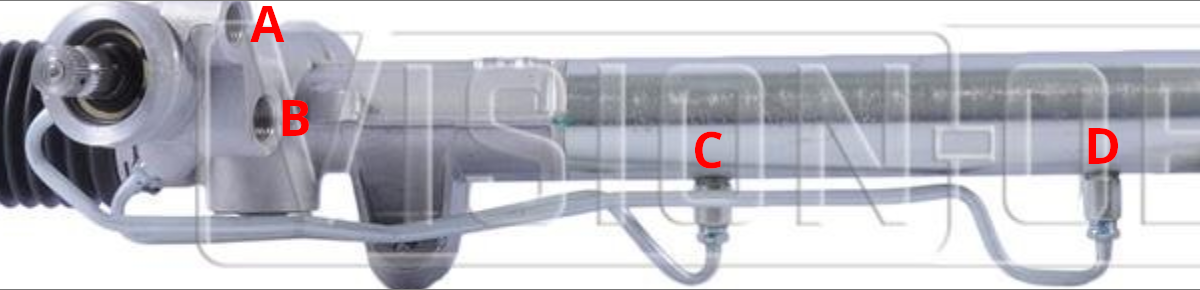
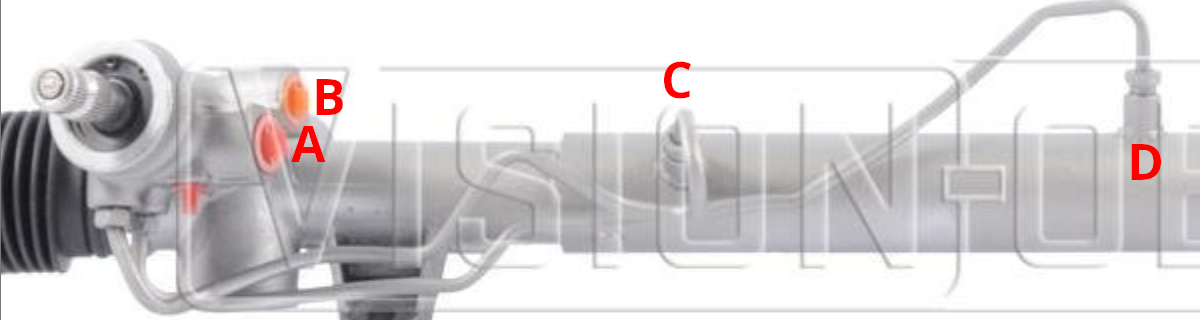
So how do you tell if you have a Saginaw or TRW rack? There are various ways mentioned on the Internet, but the best way I’ve found is to look at how the lines enter and exit the valve body and main body of the rack.
Saginaw racks have the upper pump line fitting (A) towards the front of the vehicle with the lower fitting (B) more towards the center of the valve body. The lines between the valve body and rack run parallel to each other (C and D).
TRW racks have the lower pump line fitting (B) towards the front of the vehicle with the upper fitting (A) more to the center of the valve body. The lines from the valve body to the rack are not parallel, with the shorter line (C) on top and the longer line (D) facing more forward.
That brings us to the aftermarket. Information is becoming scarce and confusing and rebuilders often pay little attention to the various differences above. That said, I was able to uncover the following part numbers for Terrepower (now BBB Industries) racks:
- 102-0101: Saginaw, standard feel, 3.18 turns, for 14″ wheels
- 102-0102: TRW, standard feel, 3.25 turns, for 14″ wheels
- 102-0103: Saginaw, standard feel, 3.25 turns, L-body
- 102-0104: Saginaw, standard feel, 3.18 turns, L-body
- 102-0105: Saginaw, firm feel, 2.94 turns, L-body
- 102-0106: Saginaw, firm feel, 2.50 turns, 14″ wheels
- 102-0107: TRW, firm feel, 2.50 turns, 14″ wheels
- 102-0108: TRW, standard feel, 3 turns, minivan
- 102-0109: Saginaw, firm feel, 2.38 turns, L-body, 15″ wheels?
- 102-0110: TRW, firm feel, 2.06 turns, 15″wheels
Some models are available “new” rather than remanufactured, which have an “N” prepended to the part number (i.e. N102-0101). Whether these parts are still available is a different issue. As of this writing, the 0101 and 0102 variants are not difficult to find (both new and reman). However, the firm feel racks are harder to find and may be special order only (if at all).
An alternative to replacement are the rebuild kits, which are available for both Saginaw and TRW. These are universal across the subtypes. If the issue is mainly with leaking or sticking, a better route may be to clean and rebuild the rack rather than to take a risk on an expensive reman replacement of questionable quality. Reman racks are usually exactly that. I will likely go this route on the CSX.
Turbo Mopars and the Aftermarket
by Russ Knize on Nov.11, 2025, under Automotive, CSX
It is starting to become a little tricky to find certain parts for these cars and the overall quality has been in decline for a long time. While Chrysler’s parts-bin approach has been helpful to keep the unique part numbers for major components down, we are still talking about 30-40 year old cars at this point. The market is drying up, so it makes sense. I’ve been collecting various parts that I know I’ll need to get the CSX back into shape and I’ve noticed some things. I’ll keep updating this as I find new details, as it’s mostly for my own posterity anyway (the Internet of olde is dead). Let the parts hoarding commence!
Engine
Timing Belt Tensioners
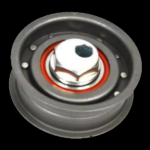
ITM 60114
These are still readily available for both the early and common blocks, but I have noticed that most manufacturers have moved to a plastic pully design. Most were either pictured as plastic or were pictured as steel but delivered as plastic (AC Delco). There is still the steel one from ITM (p/n 60114) for the early block and Enginetech (p/n TT192) for the common block, but it is the design with riveted halves that at one point had a reputation for coming apart. Perhaps these could be tack-welded together? Otherwise, we may have reached the point where we need to keep our old tensioners and try to replace the bearings….
Gaskets and Seals
Availability seems fine from most of the usual suspects (Victor Reinz, Fel-Pro). I don’t know if the quality has degraded any, but it generally wasn’t very good anyway. Timken seals are still available for certain applications, which were good back in the day. They look the same to me.
Cooling System
Radiators
There seems to be a manufacturer still making a full-size radiator for these (part number usually ends with “980”). No distinction is made between turbo and non-turbo, but a modern aluminum core likely outperforms the old designs anyway. It is of aluminum/plastic construction, so it would be wise to move away from green coolant over to something more modern. A full flush and change over to a yellow or orange antifreeze (extended-life, Dex-cool, HOAT, etc) is wise to preserve the condition of an aluminum radiator.
Heater Bypass Valves
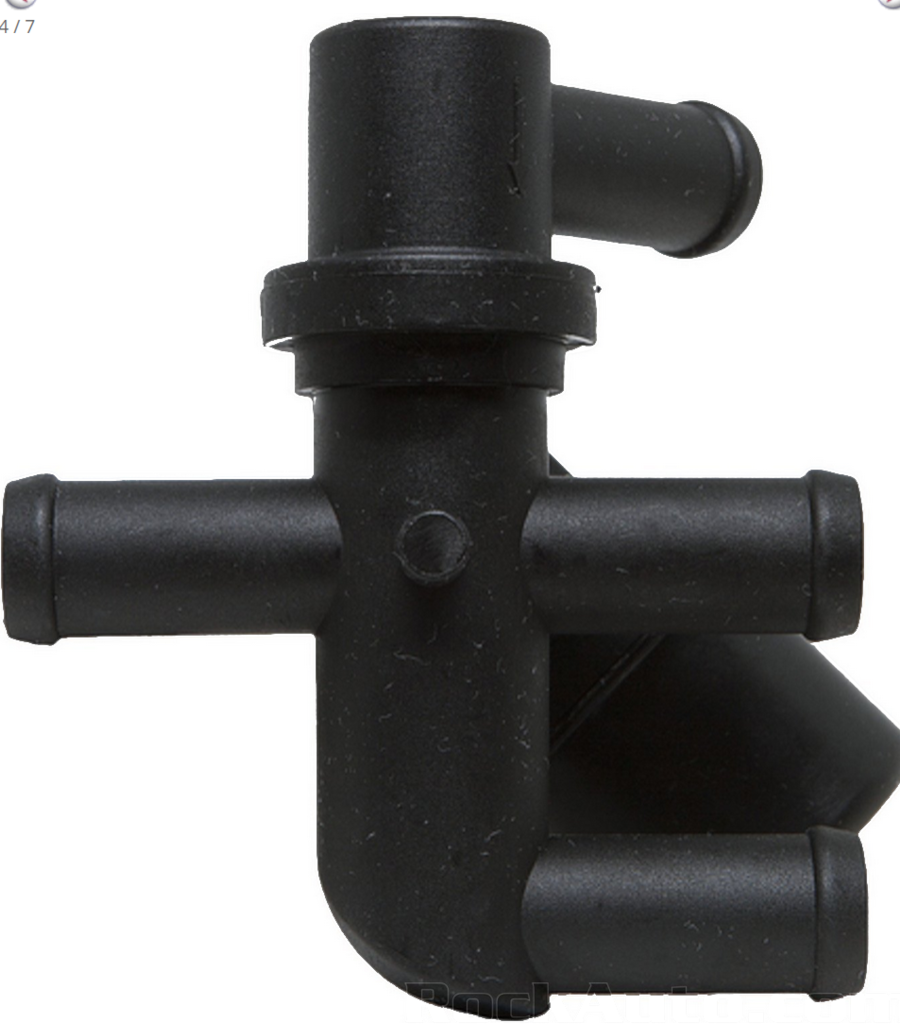
Later 3×1 arrangement with angled barb.
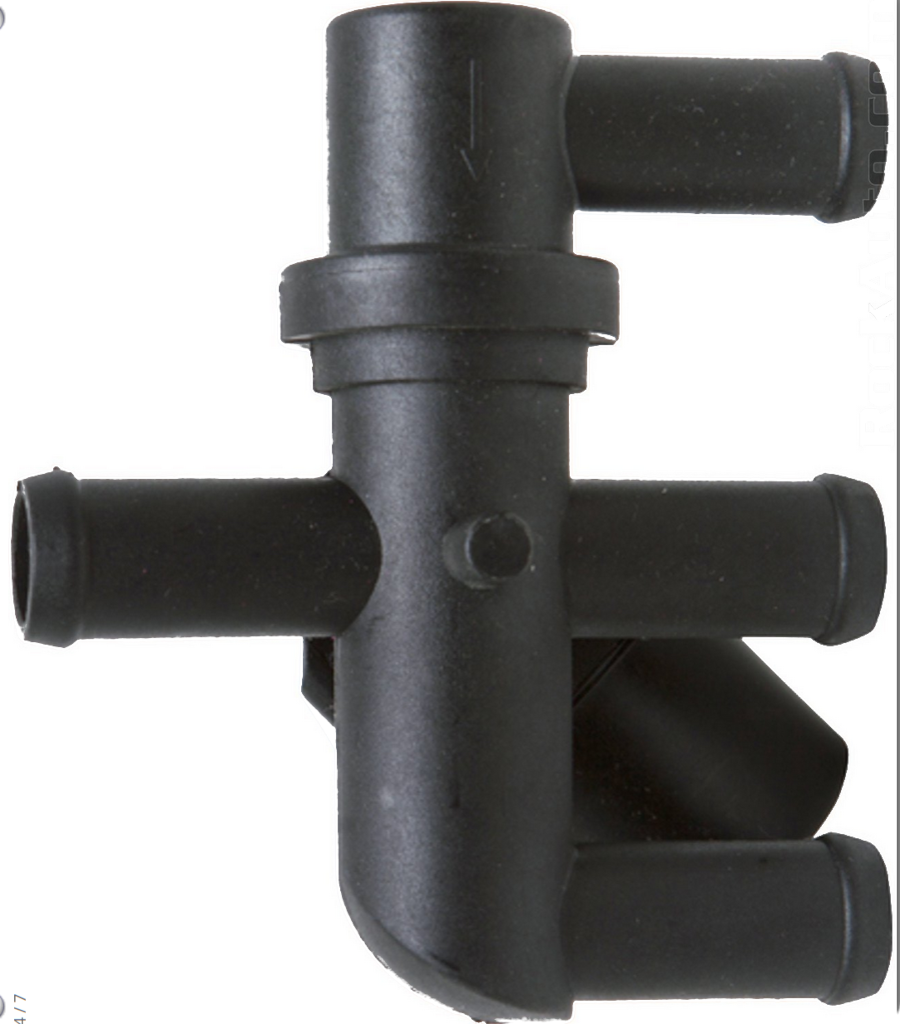
Later “3×1” arrangement.
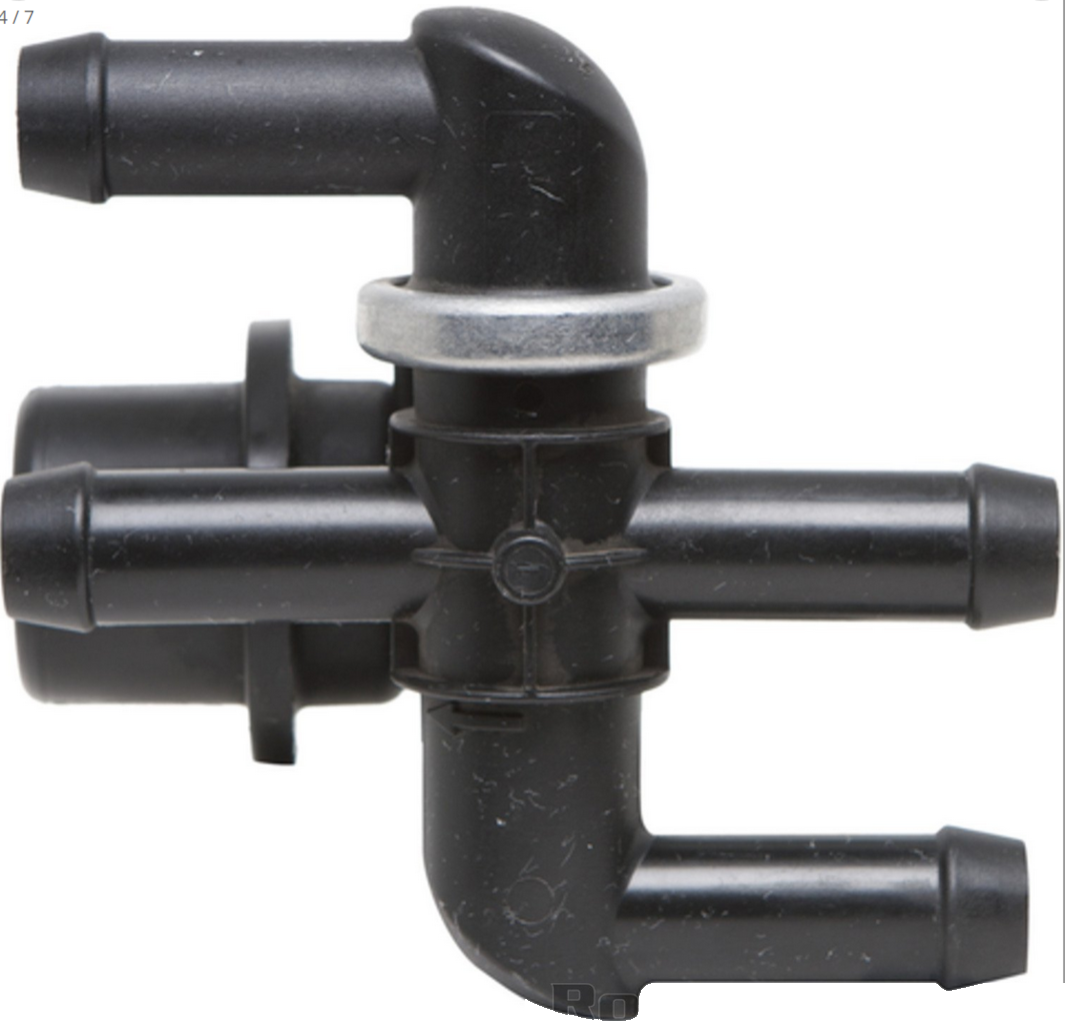
Early “2×2” arrangement.
I did notice that a number of listings for heater bypass valves are not correct. There are 3 versions of the same valve, with the only difference being the direction of the top barb. They all seem to be made by the same factory now, as the version with the crimped steel ring is being superseded by the glued version. I refer to different types as:
- 2×2 – used on early “suck-through” turbo setups when the valve is located under the airbox right next to the head.
- 3×1 – used on later “blow-through” turbo setups, sometimes including intercooled depending on the mounting location. These are usually located in the area in front of the trans or under the battery tray.
- 3×1-angled – used on non-turbo and some later turbo setups. Sometimes needed when the cruise control is located under the battery and/or when there is an intercooler and/or some custom setup.
Just look closely at the one you are replacing. For the 2×2, look at ’86 2.2L Turbo. For the 3×1, look at ’88 or ’89 2.2L Turbo II. For the angled version, I found it listed under 1990 turbo models.
Thermostat Housings
The OEM housings like to rust, but new ones were always available for a few bucks. Despite what some of the pictures show, most of the current ones (including Four Seasons) seem to deprecate down to a poorly cast iron/steel housing. It should last, but it doesn’t look right. If you want the stock look, I found that GPD p/n 8241385 arrived as the stamped one. Otherwise look to the billet aluminum housings from FWD Performance, etc.
Hoses
I was pleasantly surprised to see that coolant hoses all seem to be readily available for most setups from known-good brands like Gates and Continental. This includes the short lower radiator hose for intercooled engines (non-L-body) and a number of the custom-molded heater core lines. Some of the listings are wrong, so just look closely at what you have and check nearby models and model years if you don’t see the one that you need.
Chassis
Brakes
For typical stock stuff, parts are still readily available from reputable manufacturers (Raybestos, Dynamic Friction, etc). Most models had rear drums well into the 90s and those parts are easy to find. The later ’89+ rear disc brake setups also have reasonable parts availability, as these were used again on some later models.
The early ’87-’88 solid rear disc brake setup (Shelby and certain Daytonas) was unique, but appears to still have some parts availability. I do see some closeouts happening from a few vendors, but pads, rotors, and hardware are still available even as performance options are dwindling. Rear calipers have not been available for a long time. Rebuild kits are still out there, but replacement phenolic pistons are not. I noticed that the unique parking brake cable is also now discontinued.
Power Steering
Steering Racks
There were two OEM power steering rack manufacturers that were slightly incompatible with each other (Saginaw and TRW), each with a bunch of sub-variants. The reman market has always been a bit of a mess about this, which made it difficult to get an exact replacement rack for certain applications. This topic is a a rabbit hole, so I made a separate post about power steering racks and how to identify them.
Pumps and Lines
Remanufactured and new Saginaw and ZX pumps are still available. While separate line sets are still available for the two types of pumps, I did notice that there is often no distinction between Saginaw and TRW racks. Sometimes separate return lines are shown, but sometimes not. The two rack manufacturers had two different arrangements for the line fittings, but the fittings themselves are the same (M18x1.5 inlet, M16x1.5 return). The only difference between the lines were a few bends and the retaining bracket, so it should be possible to use what is available with some mounting modifications.
Return of the CSX?
by Russ Knize on Sep.12, 2025, under Automotive, CSX

 The CSX, which has been slumbering in the garage for the past dozen or so years, was slowly entombed in boxes of stuff and donations and whatnot. I recently cleaned most of that out with the goal of getting the CSX up and running again. It needs body work and while I have everything I need to fix it, I intend to just bite the bullet and pay a shop to finish it properly for me. Despite my best efforts on Frankentona, I know I lack the skills and facilities to do a proper paint job in my garage. I’m not looking for a concourse finish, just something durable that looks roughly stock and will polish up nice.
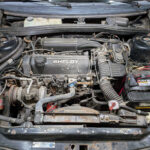 The motor is a bit of a hodge-podge right now. I threw this car back together with whatever I had lying around about 12 years ago, as we had sold our house unexpectedly quickly and I had to clear out and pack the garage. I don’t remember what head is on it, what turbo, what cal, what injectors, what clutch, etc. I do I know the trans is an A555 with an OBX and the axles are Diriveshaft Shop. I kept the motor and trans from the Daytona before I sold it, so I will definitely be using the bottom end from that.
Anyway, I swapped out the decade-old gasoline from the tank, put a new battery in it and it fired right up. No drama.
So long, old friend…
by Russ Knize on Apr.30, 2016, under Daytona
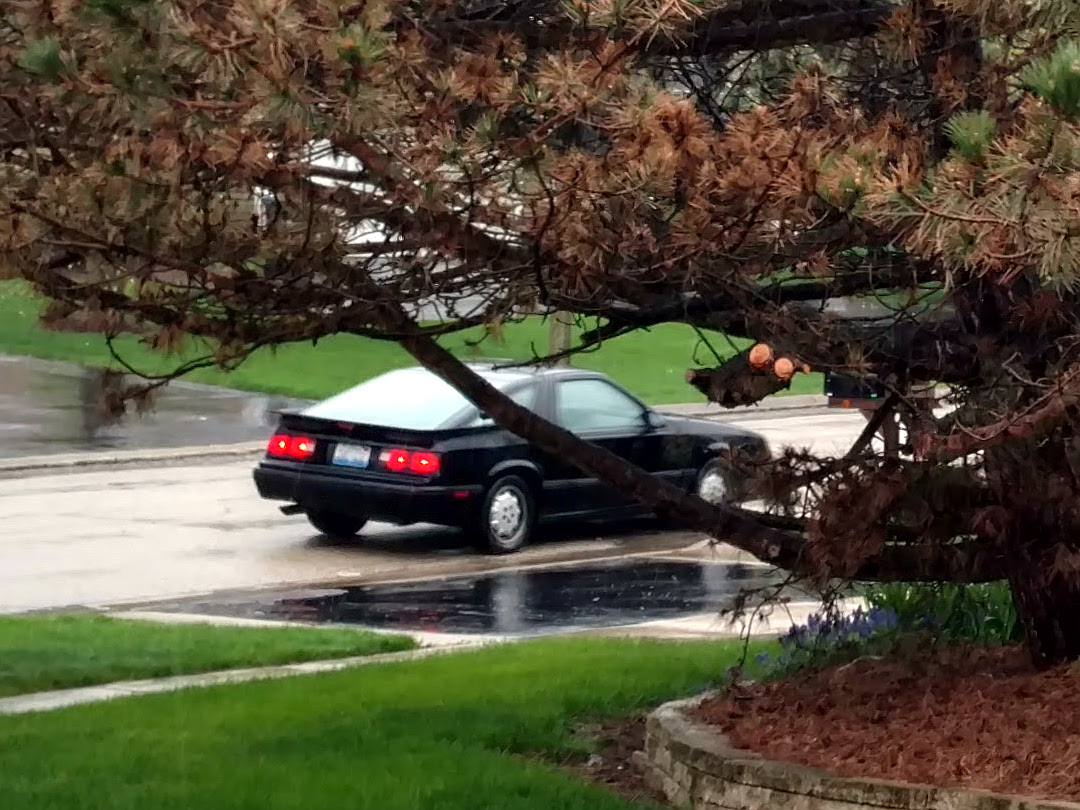 Today I let go of everything G-body. Frankentona was sold to a friend of a club member, along with my stash of spare 2nd and 3rd gen Daytona parts. It needed to go to someone with the enthusiasm and the time to put into it, instead of it rotting in the driveway. I think it’s in good hands.
Life Off of Jack Stands
by Russ Knize on Aug.18, 2014, under CSX
The CSX has been up on jack stands for about 8 years. Life has a way of rearranging priorities. However, I was either going to cobble it back together or haul it off on a trailer. Either way, it had to move. I aborted all upgrade plans, slapped my only spare working head and turbo on there and drove it. It still burns oil, so at least I know that the bottom end is truly done. Poor thing. Some day, I hope to give it the attention it deserves….
A Familiar Shadow
by Russ Knize on Aug.10, 2014, under Daytona
After almost 8 years of daily driving service, the Daytona was taken off the street for some badly needed attention. The motor had been having oil system problems for a while: low pressure and was losing oil into the coolant and other places rather rapidly. The body is also showing its age.
I’ve since swapped the motor for the original 2.2L Turbo I motor from my old 1988 Shadow. It still runs as smooth as I remember. I’m not sure how the Mitsu will behave with that giant, triple-core intercooler. I had some interesting issues with boost oscillation in the Shadow when I was using a Conquest intercooler. I am confident that a grainger can be used with a mixed pressure signal from the manifold (which causes oscillation) and turbo outlet (which causes creep) to keep the boost steady. The cal is a stock 1987 CSX cal right now and the trans is a stock 1990 A523 with the OEM Turbo II clutch that held well in the Shadow.
SDAC 21
by Russ Knize on Jun.29, 2011, under Daytona
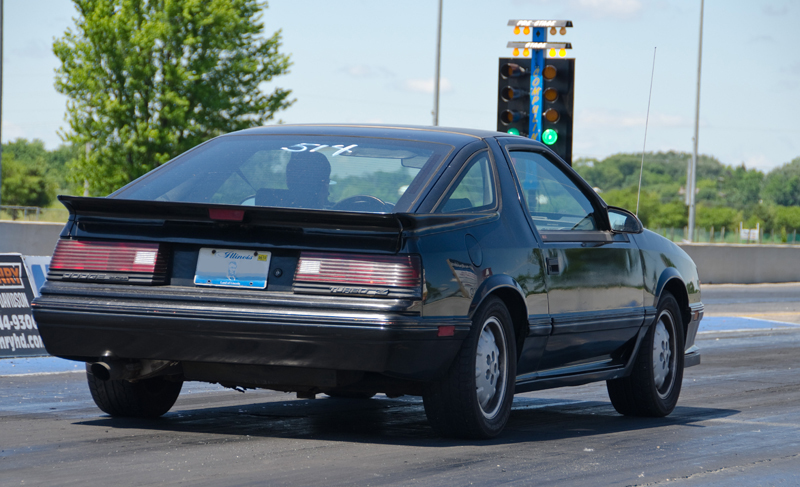 The national convention was back in Chicago again this year. The car show was at the same venue in Fox Lake along with the Chicagoland Mopar Connection’s “Mopars at the Park” show. It was neat seeing such nice FWD Mopars next to the classic iron again. The weather was perfect.
The drags were at Da Grove again as well. I was able to make a few passes. These new tires aren’t as sticky as the old Kumhos were. That along with this hair-trigger ceramic clutch had something to do with my launch problems, I think. The cal has been tuned better since the last time, so my MPH was in the 100s even on the worst pass. But I wasn’t able to beat my previous E/T. Best was 14.343sec @ 102.90mph. Best MPH was 103.66.
Coolant started getting pushed into the overflow at this point, so I called it quits.
| React | 60′ | 1/8 ET | 1/8 MPH | 1/4 ET | 1/4 MPH | Comments |
| 0.845 | 2.565 | 9.861 | 75.27 | 14.897 | 101.69 | First run. Bogged it. |
| 0.320 | 2.553 | 9.626 | 76.36 | 14.637 | 102.50 | Hot-lapped. Spun. |
| 0.827 | 2.710 | 10.065 | 76.43 | 15.056 | 103.17 | Spun then bogged it. |
| 0.663 | 2.685 | 9.938 | 78.11 | 14.876 | 103.66 | Spun like crazy. Hot-lapped. |
| 0.490 | 2.599 | 9.720 | 77.49 | 14.720 | 102.13 | Tried staging rev-limiter at 4k. Spun like crazy. |
| 0.079 | 2.572 | 9.675 | 78.31 | 14.616 | 103.37 | 4k launch, spun. Hot-lapped. |
| 0.941 | 2.337 | 9.352 | 76.76 | 14.343 | 102.90 | 4k launch, feathered the clutch better. Hot-lapped. |
Here is a video of one of the runs taken by Ron M from the SDAC-Chicago club.
Kevlar is Not Bullet Proof
by Russ Knize on Dec.13, 2010, under Daytona
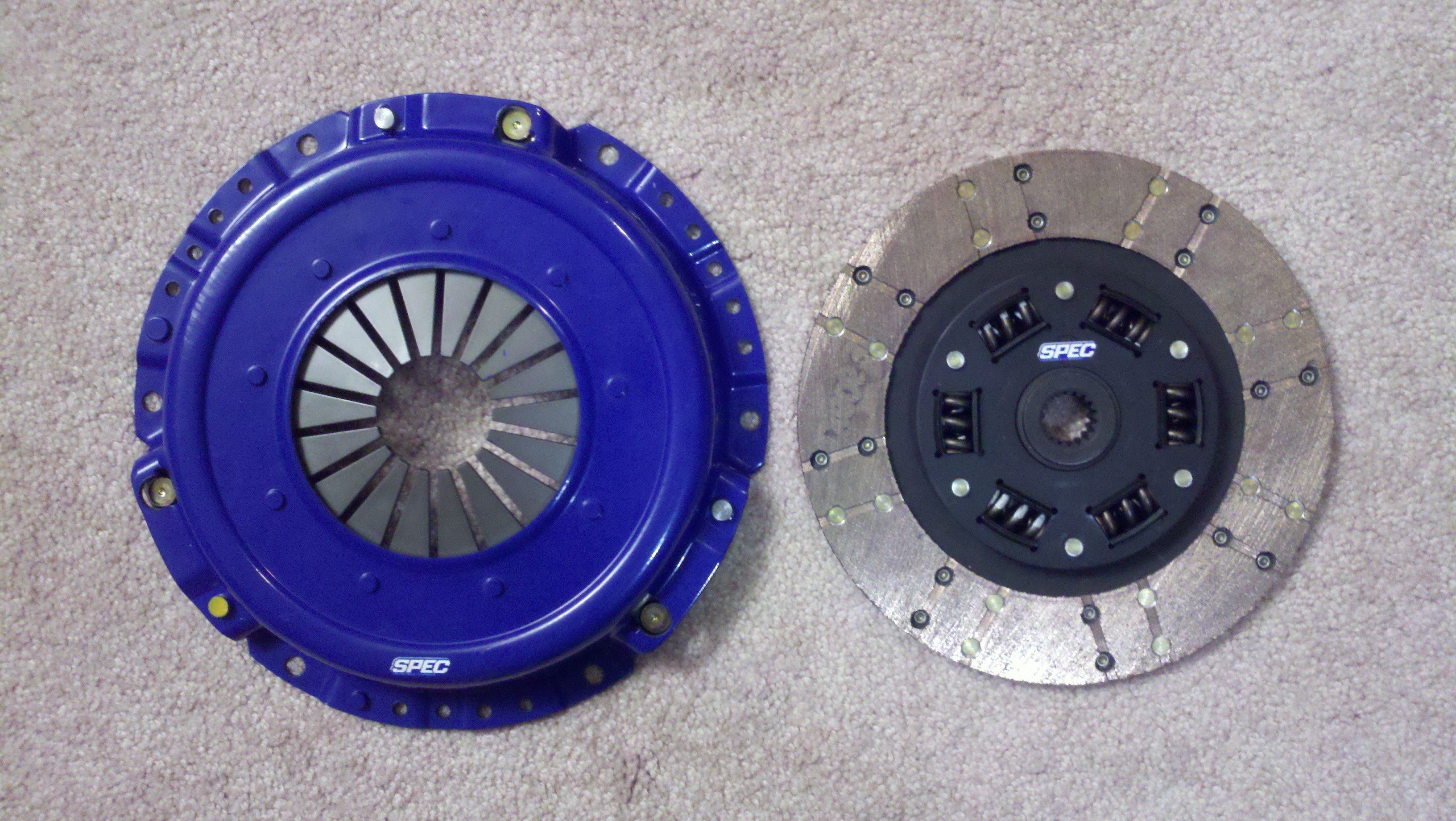 The TU Kevlar clutch that I installed back in ’06 failed. It had been slipping for a few weeks, but it was holding as long as I didn’t go over 5psi of boost or so. Eventually any boost would make it slip, so I broke down and replaced it with this one from SPEC. It is their “Stage 3+” which has a full-faced ceramic-type disc with a supposedly-modified pressure plate. The pedal feel is just like stock, so I am skeptical about that last part. It holds well, but the real test won’t be until the summer tires are back on.
The Kevlar clutch was very chattery, especially while backing up. If I tried backing up a hill, the motor would practically try to fly out of the engine bay. I also experienced a bizarre problem on two occasions where I could not release it. This was in heavy stop-and-go traffic. I suspect the disc warped because it started working again once it cooled-down. I expected better longevity from the Kevlar lining. It should have lasted much longer than the 35k I got out of the ceramic puck clutch in the CSX, but it failed right around the same time. It did have a stock-like feel in terms of engagement. As long as the RPMs were high to avoid the chattering, the engagement was smooth and easy to manage.
The SPEC clutch is “grabby”, just like you would expect from a ceramic type, but not “chattery”. In other words, the pedal has a very narrow band in which you can slip it especially at low RPMs. When you do slip it however, it does not chatter or at least not very much. Backing up is not a problem, other than avoiding a stall. The Kevlar disc had a lot of run out form the sloppy spline and that may have contributed to the problem. The SPEC disc was tighter, but still had some run out.
While the clutch was out, I replaced the 3-4 shift form pads again. I also replaced the fork. I noticed the new pads on the 1-2 fork were also starting to crack, right over the groove carved into the fork while the pads were blown 2 years ago. So I replaced that fork as well with another good set of pads. I also swapped 3rd gear and its syncro with another used one that looked better. It’s nice to have 3rd gear again.
No more MacGyver chair
by Russ Knize on Oct.09, 2009, under Daytona
Re-rewelded the driver’s seat frame. It was broken into three pieces and was being held in place by an empty cat litter container. I added some steel to it, so I don’t expect it to break again, at least on in that spot. The bottom cushion has a weird feel to it now, probably because it is being properly supported for the first time in years.
The UltraFlo muffler rusted-off. That thing only lasted 3 years…not impressive. Put the Super Turbo back on there…it’s no quieter than the UltraFlo (at least on the inside), but maybe it’s quieter for the neighbors.
The water pump housing has been leaking for years, but now coolant is dropping at an alarming rate. Not sure if it was the leak or something else, but the housing is now resealed. The car suddenly started using more oil than before as well, so something is clearly amiss. Last time I had the turbo intake off, I saw oil in there. There is still a very small amount of oil in the coolant. Now sure if it’s just leftover film or if there is a leak or crack somewhere. I’m guessing that I will find out sooner or later what the issue is/are.
A/C Again
by Russ Knize on Jul.01, 2009, under Daytona
I haven’t done anything to this car since last July other than drive it. It’s been daily driven for an entire year. 3rd gear is still jacked-up, but got a little better over time until recently. Now I can hardly get it in, but I can say that it is the shift pads again. 4th is starting to give a little trouble too, so I think I will swap the whole 3-4 gear pack for one from an ’89 A555. I wish I could buy new stop rings for less than the cost of an entire transmission. That damn short DSS axle ripped through it’s inner boot again, this time it wore through the inside. Aside from being shoddily assembled, they obviously don’t intend anyone to use these on the street. Pretty lame, given what they cost. This time the spring broke inside the tripod, probably because it can’t sit flat on the shaft end due to those welds.
Last week was really hot, so that motivated me to try to fix the A/C. Had to fix the air compressor first and various other things, but finally got it done. There was a slow leak at the H-valve due to a poorly machined surface on the hoses. Crappy aftermarket parts. The compressor has been holding up so far, so we’ll see if it makes it through the summer. I would be impressed.
Disclaimer: The projects described in these web pages may use dangerous materials, and components. This material is intended for advanced electronics experimenters only and may cause your vehicle to be suitable for off-road use only. The author assumes no liability for damages incurred through the use or misuse of the information provided herein. This information is provided "as is" and without warranties as to performance of or any other warranties whether expressed or implied. No warranty of fitness for a particular purpose is offered.
